Limited-Time Offer: Enjoy 50% Savings! - Ends In 0d 00h 00m 00s Coupon code: 50OFF
Welcome to QA4Exam
Logo

- Trusted Worldwide Questions & Answers

Most Recent ARDMS AB-Abdomen Exam Dumps


Prepare for the ARDMS Abdomen Sonography Examination exam with our extensive collection of questions and answers. These practice Q&A are updated according to the latest syllabus, providing you with the tools needed to review and test your knowledge.

QA4Exam focus on the latest syllabus and exam objectives, our practice Q&A are designed to help you identify key topics and solidify your understanding. By focusing on the core curriculum, These Questions & Answers helps you cover all the essential topics, ensuring you're well-prepared for every section of the exam. Each question comes with a detailed explanation, offering valuable insights and helping you to learn from your mistakes. Whether you're looking to assess your progress or dive deeper into complex topics, our updated Q&A will provide the support you need to confidently approach the ARDMS AB-Abdomen exam and achieve success.

The questions for AB-Abdomen were last updated on Apr 22, 2026.
  • Viewing page 1 out of 33 pages.
  • Viewing questions 1-5 out of 165 questions
Get All 165 Questions & Answers
Question No. 1

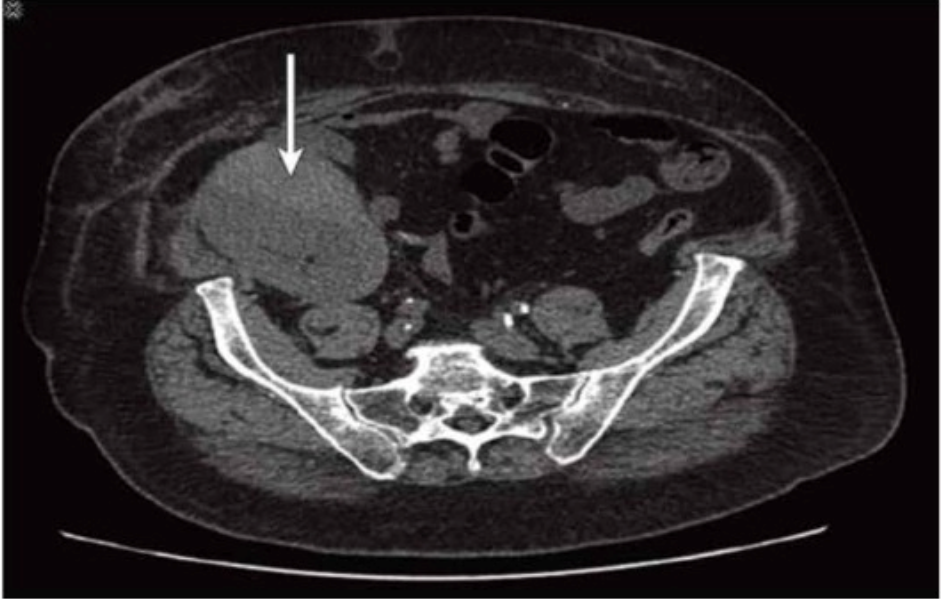
Which complication would be associated with retroperitoneal fibrosis?

Show Answer Hide Answer
Correct Answer: D

Retroperitoneal fibrosis can encase and compress the ureters, leading to obstructive uropathy and hydronephrosis. It may also involve other retroperitoneal structures but hydronephrosis is the most common significant complication.

According to Rumack's Diagnostic Ultrasound:

''Retroperitoneal fibrosis frequently results in ureteral obstruction, leading to hydronephrosis.''


Rumack CM, Wilson SR, Charboneau JW, Levine D. Diagnostic Ultrasound. 5th ed. Elsevier, 2017.

AIUM Practice Parameter for Abdominal Ultrasound, 2020.

---

Question No. 2

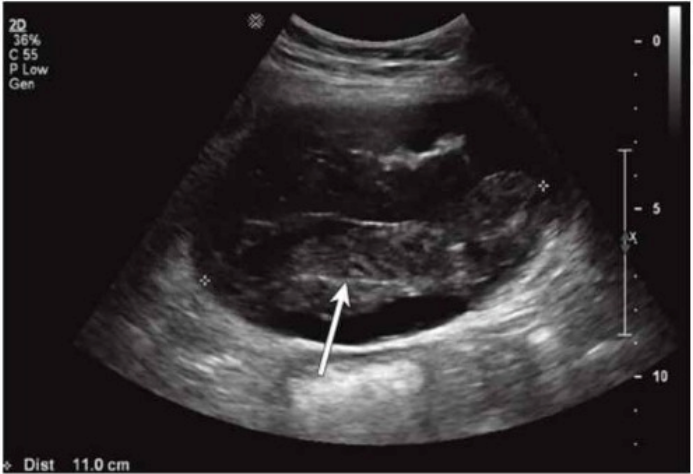
Which of the following is the most common symptom of cholelithiasis?

Show Answer Hide Answer
Correct Answer: C

The most common symptom of cholelithiasis (gallstones) is biliary colic, characterized by intermittent right upper quadrant or epigastric pain often triggered by fatty meals. Jaundice occurs in complications such as choledocholithiasis.

According to Rumack's Diagnostic Ultrasound:

''Gallstones may cause biliary colic --- episodic upper abdominal pain often related to food intake.''


Rumack CM, Wilson SR, Charboneau JW, Levine D. Diagnostic Ultrasound. 5th ed. Elsevier, 2017.

American College of Gastroenterology (ACG) Guidelines for Gallstone Disease, 2013.

---

Question No. 3

Hepatitis is classified into groups. Which of these four types are transmitted by fecal-oral route?

Show Answer Hide Answer
Correct Answer: A

Hepatitis A is primarily transmitted via the fecal-oral route, often through contaminated food or water. Hepatitis B, C, and D are transmitted through blood and body fluids.

According to CDC and WHO guidelines:

''Hepatitis A virus (HAV) is transmitted primarily by the fecal-oral route via ingestion of contaminated food or water.''


CDC. Viral Hepatitis Surveillance --- United States, 2020.

WHO. Hepatitis A Fact Sheet, 2022.

---

---

Question No. 4

How are portal veins differentiated from hepatic veins?

Show Answer Hide Answer
Correct Answer: D

Portal veins course horizontally within the liver and have echogenic walls due to their fibrous sheath. In contrast, hepatic veins course vertically toward the IVC and lack echogenic walls. Hepatic veins also demonstrate a triphasic waveform.

According to Rumack's Diagnostic Ultrasound:

''Portal veins course horizontally within the liver and are easily recognized by their echogenic walls.''


Rumack CM, Wilson SR, Charboneau JW, Levine D. Diagnostic Ultrasound. 5th ed. Elsevier, 2017.

AIUM Practice Parameter for Liver Ultrasound, 2020.

---

Question No. 5

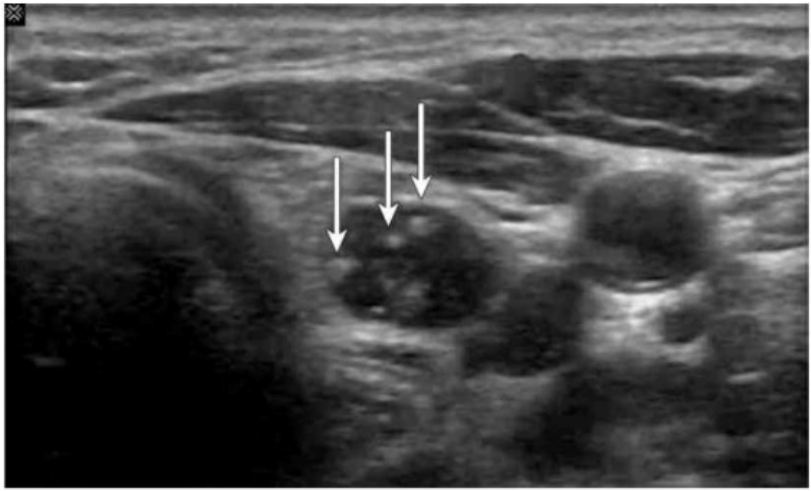
Which condition is most likely depicted in this image?

Show Answer Hide Answer
Correct Answer: D

The ultrasound image shows a classic ''target sign'' or ''donut sign,'' characterized by concentric rings of alternating echogenicity. This sonographic finding is pathognomonic for intussusception, particularly when seen in the transverse plane.

Intussusception occurs when a segment of bowel telescopes into an adjacent segment, typically in children aged 6 months to 3 years. It commonly presents with intermittent abdominal pain, vomiting, and sometimes ''red currant jelly'' stools.

Key ultrasound features of intussusception:

Target sign in transverse view (concentric rings of bowel layers)

Pseudokidney or sandwich sign in longitudinal view

May show intraluminal mesenteric fat or vessels dragged in with the intussusceptum

Comparison of answer choices:

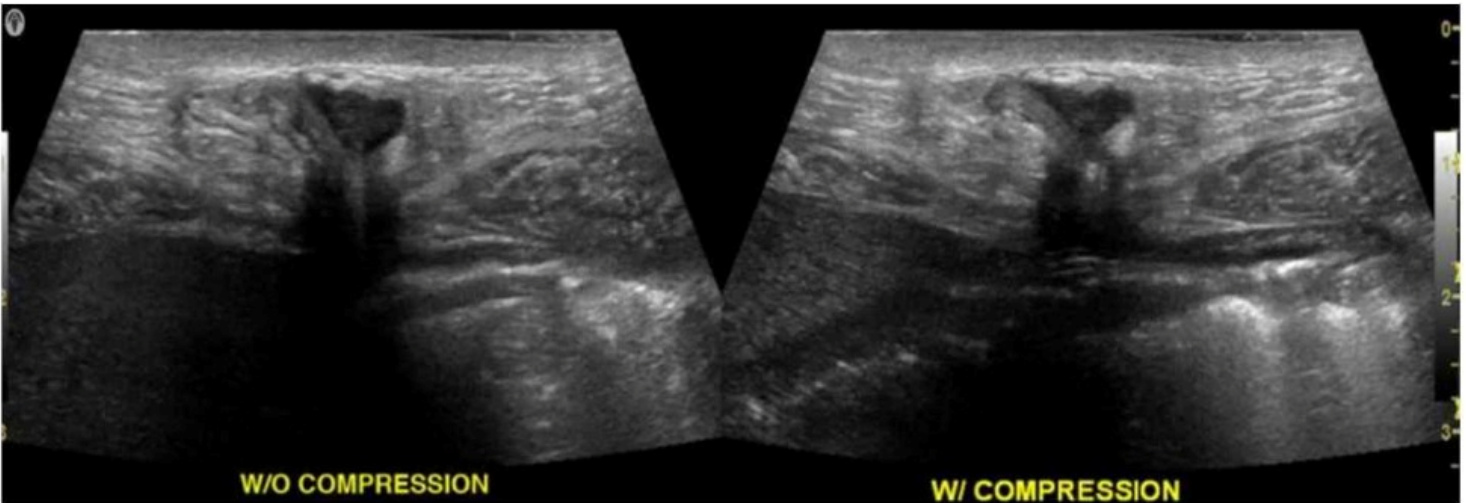
A . Bowel obstruction may show dilated loops of bowel with air-fluid levels and to-and-fro peristalsis but lacks the concentric ring sign.

B . Diverticulitis typically shows bowel wall thickening and pericolic fat stranding; not the concentric target appearance.

C . Appendicitis may appear as a blind-ending tubular structure (>6 mm), not with concentric ring pattern.

D . Intussusception --- Correct. The image demonstrates the classic target sign seen with this condition.


Coley BD. US of gastrointestinal tract abnormalities in infants and children. Radiographics. 2005;25(1):27--47.

Rumack CM, Wilson SR, Charboneau JW, Levine D. Diagnostic Ultrasound, 5th ed. Elsevier; 2017.

AIUM Practice Parameter for the Performance of Pediatric Ultrasound (2021).

Unlock All Questions for ARDMS AB-Abdomen Exam

Full Exam Access, Actual Exam Questions, Validated Answers, Anytime Anywhere, No Download Limits, No Practice Limits

Get All 165 Questions & Answers