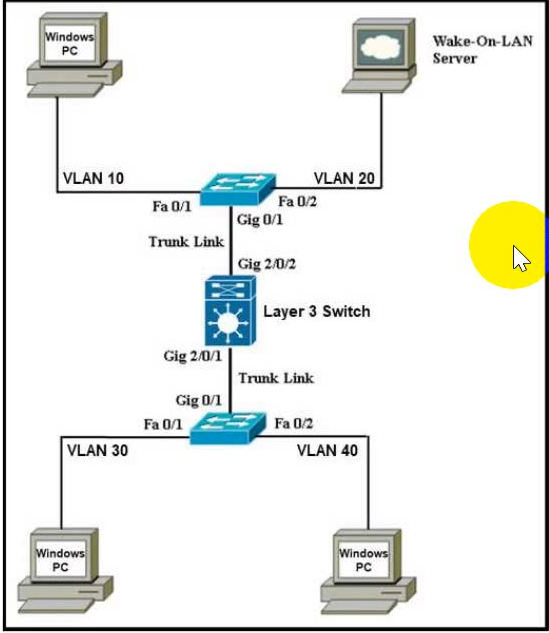
An engineer must design an in-band management solution for a customer with branch sites. The solution must allow remote management of the branch sites using management protocols over an MPLS WAN. Queueing is implemented at the remote sites using these classes:
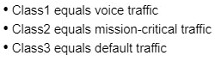
How must the solution prioritize the management traffic over the WAN?
For in-band management over the production WAN, the proper marking is DSCP CS2 mapped into the management or operations class with a minimum bandwidth guarantee. Cisco enterprise QoS guidance separates network control traffic from network management traffic. Routing protocol and control-plane traffic should not be diluted by ordinary management flows. CS6 is typically reserved for routing and network-control traffic; EF is reserved for low-latency voice bearer traffic; CS1 is commonly used for scavenger or low-priority traffic. Network management flows such as SSH, SNMP, NTP, FTP-based maintenance, and syslog require reliable delivery, but they should not starve business traffic or real-time services. Therefore, marking with CS2 and mapping the traffic into Class2 is the correct design choice. The bandwidth adjustment should come from a lower-priority class, not from the routing/control or real-time class. Because this is in-band management, the architect must also ensure access control, source restrictions, AAA, logging, and management-plane protection. QoS classification alone does not secure management access; it only gives the traffic an appropriate forwarding treatment over the MPLS WAN. Reference topics: in-band management, DSCP CS2, enterprise QoS classes, management-plane traffic.