Salesforce Certified-Business-Analyst Dumps - Pass the Salesforce Certified Business Analyst Exam in 2026
The Salesforce Certified Business Analyst exam is part of the Business Analyst certification path and is designed for professionals who work with business needs, stakeholders, and solution planning. It focuses on how candidates gather requirements, map business processes, and support delivery outcomes in Salesforce projects. This certification matters because it validates practical skills that help teams turn business goals into clear, workable solutions. It is a strong fit for aspiring and current business analysts who want to prove their ability to bridge business and technology.
#
Exam Topics
Sub-Topics
Approximate Weightage (%)
1
User Stories
Writing clear user stories, acceptance criteria, prioritization
18
2
Business Process Mapping
Current state mapping, future state design, process analysis
17
3
Requirements
Requirement gathering, documentation, validation and traceability
Supporting delivery teams, UAT planning, feedback and issue resolution
15
Total
100
The exam tests more than definitions. It checks whether candidates can apply business analysis skills in practical Salesforce project scenarios, understand requirements clearly, and support solution delivery with strong stakeholder communication. A successful candidate should show both conceptual knowledge and real-world judgment across discovery, documentation, and validation tasks.
Actual Salesforce Certified-Business-Analyst Exam Questions
01Question 1
Cloud Kicks (CK) is expanding and has many different departments in manufacturing and delivery. CK needs to prepare for a new Sales Cloud implementation for it, 6,000 users. To increase adoption, the business analyst (BA) wants to break down existing sides between the manufacturing and delivery departments.
Which planning approach should the ISA take to get buy-in from users?
A business analyst (BA) at Northern Trail Outfitters was asked to create a new user story for a Sales Cloud update requested by the inside sales team. The BA created the following story:
"As a user, I need visibility to customers' purchase history details so I can increase efficiencies and improve closure rates by better tailoring sales offerings."
Which mistake did the BA make when creating this story?
Universal Containers is beginning a Commerce Cloud project with a new client. The business analyst (BA) wants to leverage customercentric discovery to ensure a successful project outcome.
How can the BA put this into action before the first requirements workshop?
Correct answer:A
Customer-centric discovery aims to understand the client's current processes and pain points from the customer's perspective:
Experience Perspective: By navigating the online purchasing process, the BA gains firsthand insight into the client's existing customer journey, a fundamental step in Salesforce Commerce Cloud projects to identify gaps and improvement areas.
Preparation for Workshops: Salesforce Business Analysts are encouraged to come to workshops with contextual understanding of the business processes, aligning directly with project goals.
Focus on Outcomes: Engaging with the client's purchasing process ensures the BA aligns the Commerce Cloud solution with the customer's needs and expectations, critical for a successful implementation.
04Question 4
The business analyst (0A) at Universal Containers has met with stakeholders and is using the waterfall methodology to capture requirements for Sales Cloud enhancements for a future product release.
What is the next step for the BA to take before build can begin?
Correct answer:B
This answer states that getting approval and signoff on the requirements is the next step for the BA to take before build can begin. Approval and signoff on the requirements means that the stakeholders agree that the requirements are accurate, complete, and feasible, and that they authorize the development team to start building the solution. Approval and signoff on the requirements helps to avoid scope creep, rework, and miscommunication. Reference: https://trailhead.salesforce.com/en/content/learn/modules/salesforce-business-analyst-certification-prep/prepare-for-the-salesforce-business-analyst-certification-exam
05Question 5
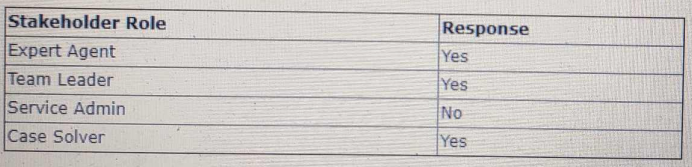
Cloud Kicks needs to revamp its support process to improve the customer experience and has asked the Service Cloud team to collaborate with the business analyst (BA). The BA has scheduled an initial live process mapping session with all stakeholders and received the following calendar responses:
QA4Exam.com offers Exam PDF material with actual questions and answers plus an Online Practice Test to help you prepare for the Salesforce Certified-Business-Analyst exam efficiently. The practice format gives you a real exam simulation so you can get used to the style, timing, and pressure before test day. You also benefit from up-to-date questions and verified answers that help you focus on the right areas. With repeated practice, you can improve time management, build confidence, and increase your chances of passing on the first attempt.
Frequently Asked Questions
1. Is the Salesforce Certified Business Analyst exam difficult?
It can be challenging if you are not familiar with requirements, user stories, and stakeholder collaboration. With focused preparation and practice, many candidates are able to manage it successfully.
2. Do I need hands-on experience to pass the exam?
Hands-on experience is very helpful because the exam is based on practical business analysis tasks. Real project exposure makes topics like process mapping and user acceptance easier to understand.
3. Can I pass with only braindumps?
Braindumps alone are not the best approach. You should use them with proper study and practice so you understand the concepts behind the answers and can handle different question styles.
4. Are QA4Exam.com dumps enough or do I need other resources?
QA4Exam.com dumps and the Online Practice Test are strong preparation tools, but combining them with topic review is a smart way to improve understanding and confidence. This helps you prepare for both memorized and scenario-based questions.
5. How do the QA4Exam.com practice tests help with first-attempt success?
They help you practice real exam timing, identify weak areas, and review verified answers before the exam. This kind of preparation can improve accuracy and reduce surprises on test day.
6. What format do the QA4Exam.com products come in?
QA4Exam.com provides an Exam PDF and an Online Practice Test. These formats are designed for flexible study and realistic exam practice.
7. If I retake the exam, should I use the same preparation method?
If you need a retake, review the areas where you struggled and continue practicing with updated questions and answers. A focused review of weak topics is the best way to improve your next attempt.