
Limited-Time Offer: Enjoy 50% Savings! - Ends In 0d 00h 00m 00s Coupon code: 50OFF
Welcome to QA4Exam

Practice questions demo

CVS Exam Dumps and Practice Questions

Questions 1 to 5 of the 143-question CVS bank, each with its correct answer and an explanation. 2 of 5 ask for more than one answer. This is page 1 of 29.

1 / 29

Actual SAVE International CVS Exam Questions

Question 1

What are effective approaches used by the VM facilitator during the Evaluation Phase?

Choose 2 answers.

Correct answer: A, B

The correct answers are A and B. During the Evaluation Phase, the VM facilitator's role is to preserve structure, discipline, and decision quality while the team screens creative ideas for value-improvement potential. SAVE's Value Methodology Standard defines the Evaluation Phase as a structured evaluation process used to select ideas that can improve value while still delivering required functions and respecting performance requirements and resource limits. ()

Therefore, the facilitator must recognize when discussion becomes off-topic and redirect the group toward the agreed evaluation criteria, study objectives, required functions, and constraints. This prevents the phase from becoming another brainstorming session or an unstructured debate. The facilitator must also establish a clear context for the session, meaning the team understands what is being evaluated, against which criteria, and for what decision purpose.

Option C is incorrect because evaluation may include clarification, combination, or refinement of ideas; useful modifications should not be automatically blocked. Option D is also incorrect because VM allows tailored application of methods, and the facilitator should select techniques appropriate to the study rather than force one universal technique. ()

Reference/topics: Evaluation Phase; VM Facilitation; Idea Screening; Evaluation Criteria; Team Focus and Direction.

Question 2

A well-managed VM program will include a process

Choose 2 answers.

Correct answer: A, C

The correct answers are A and C. A well-managed Value Methodology program must have a structured process for deciding which subjects should receive VM studies and when VM should be applied. VM program management is not simply about conducting studies randomly; it requires screening potential projects, products, processes, or services to determine where VM effort can create meaningful value improvement. The VM Guide program-management section specifically includes ''Selecting subjects for VM studies'' and ''Timing of VM studies'' as key management areas. (pdfcoffee.com)

Option A is correct because subject selection helps the organization focus limited VM resources on studies with suitable size, complexity, risk, cost, performance concern, or strategic importance. Option C is correct because timing matters. SAVE guidance notes that VM may be applied at different points in a subject's life cycle, and early application often improves direction before later implementation costs increase. ()

Option B is incorrect because no VM program can guarantee return on investment from every individual study. Option D is incorrect because requiring a VM study on every subject would waste resources and ignore proper screening criteria.

Reference/topics: VM Programs; VM Program Management; Selecting VM Study Subjects; Timing of VM Studies; VM Application Criteria.


Question 3

What is the correct order for the management of change stages?

Correct answer: D

The correct sequence is shock, defensive retreat, acknowledgement, adaptation to change. In Value Methodology, proposed alternatives often challenge existing assumptions, designs, ownership positions, or organizational habits. Therefore, resistance to change must be anticipated and managed as part of facilitation, presentation, and implementation. The CVS study material places team building and facilitation knowledge within the areas of team dynamics, consensus building, habits, attitudes, creativity roadblocks, and effective presentation. ()

The first reaction to significant change is usually shock, where stakeholders are surprised or unsettled by the proposed departure from the current approach. This is followed by defensive retreat, where individuals may protect the original concept, defend prior decisions, or resist the implication that improvement is possible. The next stage is acknowledgement, where stakeholders begin to recognize the validity of the new information, value alternative, or improvement opportunity. Finally, adaptation to change occurs when the organization accepts the revised direction and begins integrating it into practice. This aligns with VM implementation guidance, where accepted alternatives must be planned, committed to, tracked, and embedded into the organization. ()

Reference/topics: VM Facilitation and Team Dynamics; Change Management Strategies; Presentation Phase; Implementation Activities; Team Dynamics.


Question 4

The main objective of the Information Phase is to

Correct answer: B

The correct answer is B because the Information Phase is the point in the VM Job Plan where the study team establishes a shared factual understanding of the project before moving into function analysis or idea generation. SAVE's Value Methodology Standard describes the Information Phase as the phase in which the team reviews and defines current project conditions and identifies the goals of the study. (wsdot.wa.gov) This means the team examines available drawings, costs, constraints, owner requirements, user needs, scope, assumptions, performance expectations, schedule conditions, and other baseline project information.

Option A is incorrect because determining alternative solutions belongs primarily to the Creativity Phase, where ideas are generated after functions are understood. Option C is not the main objective; an information workbook or data package may support the phase, but it is a tool or deliverable rather than the fundamental purpose. Option D is also incorrect because selecting or adding VM team members is normally addressed during Preparation / Pre-Workshop planning, not during the Information Phase.

The Information Phase creates the factual platform for all later phases. Without a clear understanding of project information, function analysis, creativity, evaluation, and development cannot be performed reliably.

Reference/topics: Information Phase; VM Job Plan; Project Data Review; Current Conditions; Study Objectives.


Question 5

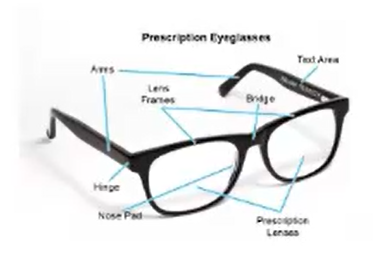
On the Function Logic Path, how do prescription eyeglasses correct vision?

Correct answer: D

The correct answer is D. Align focus. In Function Analysis, the team defines what the subject must do, not what its parts are. SAVE's study guidance states that functions are described using two-word active verb/measurable noun pairings, and FAST is used to show how project functions relate to each other. ()

For prescription eyeglasses, the basic function is correct vision. On the Function Logic Path, the ''how'' question asks: How do eyeglasses correct vision? The best functional answer is align focus because prescription lenses bend and direct light so the image focuses correctly for the user. This directly supports the basic function.

The other choices are supporting or secondary functions. Secure position helps hold the glasses properly on the face, but it does not itself correct vision. Minimize weight improves comfort, and improve durability supports dependability, but neither explains the direct functional mechanism of vision correction. FAST logic is specifically used to map these function relationships through How/Why reasoning, making align focus the correct lower-order function linked to ''correct vision.'' ()

Reference/topics: Function Analysis Phase; FAST Diagramming; Function Logic Path; Basic Function; Lower-Order Function.


Unlock all SAVE International CVS questions

Full exam access, validated answers, and unlimited practice with no download limits.