Limited-Time Offer: Enjoy 50% Savings! - Ends In 0d 00h 00m 00s Coupon code: 50OFF
Welcome to QA4Exam
Logo

- Trusted Worldwide Questions & Answers

Most Recent The Open Group OGA-031 Exam Dumps


Prepare for the The Open Group ArchiMate 3 Part 1 Exam exam with our extensive collection of questions and answers. These practice Q&A are updated according to the latest syllabus, providing you with the tools needed to review and test your knowledge.

QA4Exam focus on the latest syllabus and exam objectives, our practice Q&A are designed to help you identify key topics and solidify your understanding. By focusing on the core curriculum, These Questions & Answers helps you cover all the essential topics, ensuring you're well-prepared for every section of the exam. Each question comes with a detailed explanation, offering valuable insights and helping you to learn from your mistakes. Whether you're looking to assess your progress or dive deeper into complex topics, our updated Q&A will provide the support you need to confidently approach the The Open Group OGA-031 exam and achieve success.

The questions for OGA-031 were last updated on Apr 21, 2026.
  • Viewing page 1 out of 8 pages.
  • Viewing questions 1-5 out of 40 questions
Get All 40 Questions & Answers
Question No. 1

Complete the sentence. The passive counterpart of the application component in the application layer is called a(n)_____________

Show Answer Hide Answer
Correct Answer: C

According to the application layer metamodel, the passive counterpart of the application component is the data object, which represents data structured for automated processing. A data object can be accessed or manipulated by an application component or an application function.


Question No. 2

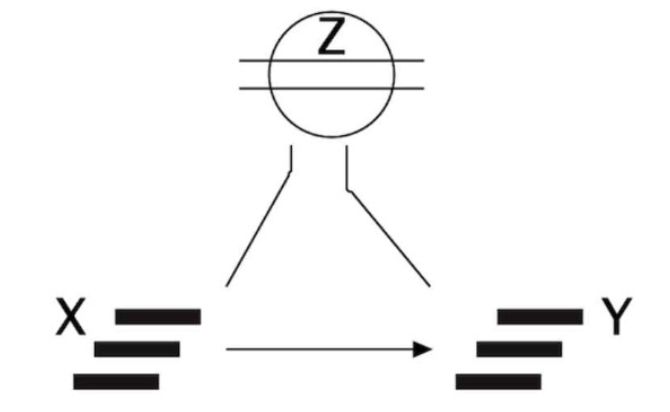
Relationships are classified in a number of categories as shown below What are A, B and C?

Show Answer Hide Answer
Correct Answer: D

This is because the diagram shows the three main categories of relationships in ArchiMate: structural relationships, which model the static construction or composition of concepts; dependency relationships, which model how elements depend on or use other elements; and dynamic relationships, which model the temporal or causal connections between elements.


Question No. 3

Refer to the exhibit.

Consider the metamodel fragment shown. What is the element marked X?

Show Answer Hide Answer
Correct Answer: D

Comprehensive and Detailed In-Depth

The diagram represents a metamodel fragment based on ArchiMate 3.2, specifically focusing on Behavior Elements.

Behavior Element is a general category that consists of external and internal behavior elements.

External Behavior Element represents behavior that is externally observable by other components (such as a service or an interface).

Internal Behavior Element represents behavior that is performed within an entity (such as a function, process, or interaction).

The element X is a specialized form of an Internal Behavior Element.

According to ArchiMate 3.2 Specification, Section 5.2, internal behavior elements include processes, functions, interactions, and events.

Function (A) Incorrect

A Function is an internal behavior element, but it is not the correct specialization in this hierarchy.

Functions are usually structured ways of performing internal operations rather than discrete occurrences.

Service (B) Incorrect

A Service is an external behavior element, meaning it is not classified under internal behavior elements.

Since X is placed under Internal Behavior Elements, this cannot be the correct answer.

Interface (C) Incorrect

An Interface is not a behavior element; instead, it is part of the structure that exposes services.

The hierarchy in the question does not deal with structural elements, making Interface an incorrect choice.

Event (D) Correct Answer

Events represent discrete occurrences that can trigger other behaviors within the architecture.

Events belong to Internal Behavior Elements because they drive processes and functions.

According to ArchiMate 3.2 Specification, Section 5.2.1, an Event is classified as an Internal Behavior Element alongside functions and processes.

Final Answer: D. Event


ArchiMate 3.2 Specification: Sections 5.2 (Behavior Elements) and 5.2.1 (Event as an Internal Behavior Element).

Question No. 4

Complete the sentence. In the Motivation elements metamodel, a principle __.

Show Answer Hide Answer
Correct Answer: B

Comprehensive and Detailed in Depth

A Principle in ArchiMate is a high-level guideline that directs decision-making and architecture development. It is a specialization of a Constraint, meaning that it restricts behavior in a way that aligns with organizational goals.

The ArchiMate 3.2 Specification describes Principles as specific constraints that apply to enterprise architecture and governance.


Archi User Guide

ArchiMate 3.2 Specification

Question No. 5

Consider the diagram which shows part of the ArchiSurance Claims Administration:

(A diagram showing:

"Claim Filed" (Business Event) "Accept Claim" (Business Process) "Assign Claim" (Business Process)

A Customer Service Representative is assigned to Accept Claim.)

Which of the following describes this diagram?

Show Answer Hide Answer
Correct Answer: D

Comprehensive and Detailed In-Depth

This ArchiMate Business Layer diagram represents a sequence of business processes triggered by a business event.

'Claim Filed' is a Business Event, which means it represents an external occurrence that initiates a process.

'Accept Claim' is a Business Process, meaning it is a structured activity that follows the event.

'Assign Claim' is another Business Process, which follows after the 'Accept Claim' process.

A Customer Service Representative role is assigned to the 'Accept Claim' process, but the focus of the diagram is the event-driven flow of processes.

Analysis of Answer Choices:

A. The Claim Filed event assigns the Customer Service Representative to participate in the Accept Claim and Assign Claim processing. Incorrect

The Customer Service Representative role is involved only in the 'Accept Claim' process, but the diagram does not indicate their role in 'Assign Claim.'

ArchiMate 3.2 Specification, Section 6.3.2, states that Business Events trigger processes but do not assign roles.

B. The event Claim Filed triggers the Accept Claim process which is serviced by the Customer Service Representative role before the Assign Claim process. Incorrect

While Claim Filed triggers Accept Claim, the focus of the diagram is on process flow, not role assignments.

The key relationship is between the business processes, not the role.

C. The information that flows from Claim Filed to Accept Claim and then to Assign Claim is reviewed by the Customer Service Representative role. Incorrect

The Customer Service Representative role is assigned to 'Accept Claim,' but there is no indication they review information across all steps.

The diagram shows process flow, not an explicit review process.

D. Business event Claim Filed triggers a business process Accept Claim which in turn triggers an Assign Claim process. Correct Answer

'Claim Filed' (Business Event) triggers 'Accept Claim' (Business Process), which then triggers 'Assign Claim' (Business Process).

ArchiMate 3.2 Specification, Section 6.3.1, states that Business Events initiate Business Processes, and processes can trigger subsequent processes.

This matches the flow depicted in the diagram.

Final Answer: D. Business event Claim Filed triggers a business process Accept Claim which in turn


ArchiMate 3.2 Specification: Sections 6.3.1 (Business Processes) and 6.3.2 (Business Events).

Archi User Guide: Modeling event-driven process flows in business architecture.

Unlock All Questions for The Open Group OGA-031 Exam

Full Exam Access, Actual Exam Questions, Validated Answers, Anytime Anywhere, No Download Limits, No Practice Limits

Get All 40 Questions & Answers